Carbon Market Network


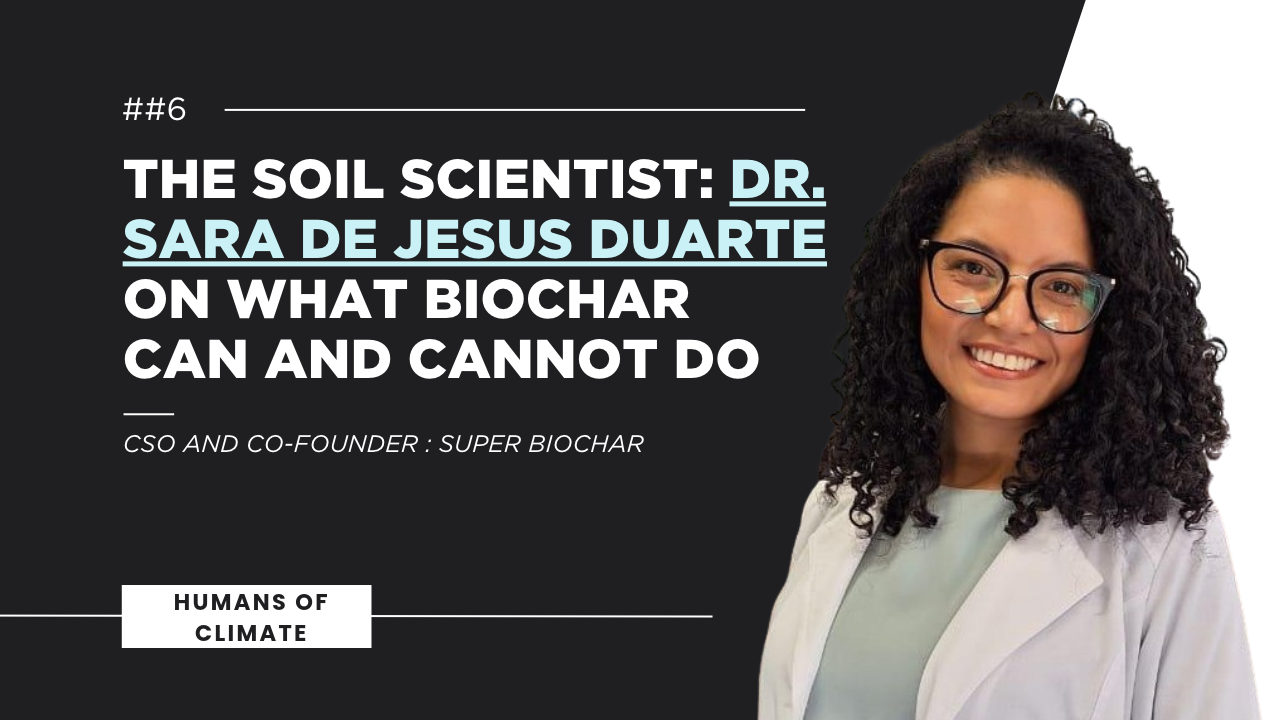
Dr. Sara de Jesus Duarte grew up on a cocoa farm. She learned about soil before she learned about soil science, watching her family navigate the particular combination of low yields, difficult soil management, and seasonal unpredictability that defines smallholder agriculture in much of the world. That early proximity to the gap between what land could produce and what it actually produced became the foundation of a career.
She is now a biochar consultant and co-founder and Chief Science Officer of Super Biochar, based in USA. She holds a Ph.D. in soil science, has worked across different continents and agricultural systems for more than a decade, and has reached around 24,000 farmers through her work. She is also the author of Biochar: Fueling a New Economy in the Developing World. Her perspective on biochar sits at a specific and valuable intersection: deep scientific training on one side, and years of watching that science meets the economic realities of farming on the other.
Her central argument is that treating biochar as a finished, standalone product rather than as an ingredient is the source of many mistakes in its application. Biochar’s true potential lies in how it is formulated and integrated into tailored solutions, making it a key component in addressing climate change, improving agricultural performance, and creating economic value.
From a Cocoa Farm to Terra Preta
The path into soil science was not linear. Sara’s undergraduate study of agronomy grew from the farming questions she had grown up with. A soil physics internship revealed how fascinating the science behind those questions was. But the turning point came during her master’s degree, through a colleague struggling to analyze biochar-amended soil samples.
The samples were resistant to standard methods. Their water retention was unusual. Their physical properties did not behave as expected. For someone drawn to scientific challenges, that resistance was an invitation.
Around the same time, her university hosted an international meeting on biochar. Researchers there made the case that significant knowledge gaps still existed around how biochar affects soil physical and hydraulic properties. Sara recognized a research problem worth a Ph.D. She also encountered, for the first time, the story that would most shape her understanding of what biochar could mean.
“The Amazonian Dark Earths showed me that we could learn from both nature and the accumulated knowledge of Indigenous peoples to develop more sustainable agricultural systems.”
Terra Preta, the dark, fertile soils created by Indigenous communities in the Amazon over centuries, retain their fertility and support biological activity across very long timescales. They are not laboratory results. They are empirical proof, accumulated over generations, that carbon-enriched soils can sustain productivity indefinitely. For Sara, they were both a scientific inspiration and a philosophical one: evidence that the knowledge needed to build better soils already existed, long before modern research arrived to study it.
The soil science that followed built on that insight. Soil, she came to understand, is not simply a medium in which plants grow. Its physical structure, water dynamics, and biological activity directly govern plant health, agricultural productivity, and the carbon cycle. Biochar, applied well, can improve all three. The challenge is knowing what “applied well” means in a specific soil and for a specific crop.
Why There Is No Universal Biochar
One of the most consequential misunderstandings in the biochar sector, in Sara’s view, is the assumption that a result demonstrated in one soil will transfer to another. It frequently does not.
The outcome of a biochar application depends on several factors. First, the biochar itself: its feedstock, production conditions, nutrient content, particle size, and pH. Second, soil properties, including texture and macro- and micronutrient profiles. Topography and management systems also matter, as do crop type and growth stage. Each of these variables plays a key role in determining performance. Ignoring them can lead to poor outcomes or even harm soil health and crop productivity.
“I’ve seen situations where farmers applied biochar without considering these factors and ended up creating problems instead of improving their soils.”
One concrete example: applying fine, powdery biochar to certain clay soils can contribute to compaction rather than improving soil structure. What looks like a straightforward soil amendment becomes, under the wrong conditions, an intervention that worsens the problem it was meant to address.
Her approach is to assess the soil thoroughly before selecting a biochar, not the other way around. This means understanding the soil’s history and its specific constraints, evaluating the available biochar options against those constraints, and designing a blend suited to the combination of soil and crop in question. Blended formulations that combine biochar with nutrients, compost, or beneficial microorganisms consistently outperform biochar applied alone, because they address multiple soil needs simultaneously rather than treating carbon alone as the variable that matters.
The field trial design that follows is flexible rather than academic in its requirements. On a working farm, the farmer’s priorities, land availability, and available resources constrain what is possible. At a minimum, Sara looks for a clear baseline and a treatment that allows comparison. The goal is not methodological purity. It is sufficient evidence to know whether the intervention is making a difference that the farmer can act on.
Carbon Market Insider Newsletter
Weekly insights on carbon markets, climate policy, carbon credits, and sustainability.
Carbon Is the Anchor, Not the Whole Story
Sara is direct about where biochar’s greatest potential lies. Carbon removal, she says, is the primary value: converting biomass that would otherwise decompose and release CO2 into a stable form of carbon that can remain in soil for hundreds of years. That is the foundational case.
But she is equally direct about what follows from it. A biochar industry built exclusively on carbon credits is not a sustainable biochar industry.
“We cannot build a sustainable biochar industry by relying on carbon credits alone. We need to find ways to use biochar in different applications and create real economic value from it.”
The argument is economic as much as scientific. Carbon credit markets are volatile and still maturing. An agricultural intervention whose viability depends entirely on credit prices carries a structural fragility that soil improvement, fertilizer reduction, and yield enhancement do not. When biochar is positioned as an ingredient in a broader agronomic system, rather than as a carbon credit generator with agricultural side effects, it becomes something that works whether or not carbon markets are having a good year.
In practice, this means developing biochar formulations that are specific to soils and crops: products that reduce or cut lime requirements, reduce fertilizer use, lower irrigation demand through improved water retention, and deliver yield improvements that farmers can measure in their accounts. Sara has seen fertilizer use cut by half while maintaining high productivity. She has seen germination rates improve by ten percent against baseline. She has seen crop yields double. These are not carbon market outcomes. They are agricultural outcomes that make biochar adoption rational independent of any carbon incentive.
Farmers Are Businesspeople
The shift that most changed how Sara approaches her work came from a farmer, not a laboratory.
She describes working with a farmer who had used biochar for the first time. He was skeptical at the start: biochar looks like charcoal, and his first response was a reasonable question about why charcoal would help his soil. After the first growing season, the results were clear enough that when it came time to apply again, he brought his neighbor. His family came. His grandsons applied the biochar alongside him, excited by the plant height, yield and plant vigor they could see in the treated plots compared with the control.
What struck her was not the yield data. It was the social fact that this farmer had become an advocate, sharing results with people around him because he had seen the evidence with his own eyes.
“When farmers become advocates because they have seen the results with their own eyes, you realize that the knowledge is spreading far beyond your own research.”
That experience, and others like it, clarified something important. Farmers are businesspeople operating under real financial pressure. They need to reduce production costs and increase yields. They do not need a scientific explanation of biochar’s pore structure or cation exchange capacity. They need to understand whether the investment returns more than it costs, and under what conditions.
This has changed how Sara communicates. She now begins by listening to what a farmer is trying to solve, rather than explaining what biochar can do. She presents return on investment before she presents soil science. She uses field data from comparable farms wherever possible, because a farmer’s confidence in a new input is built through evidence from conditions they recognize, not from evidence collected in controlled experimental settings that bear little resemblance to their reality.
Designing for the Full System, Not Just the Soil
When Sara is asked to design a biochar intervention for a region dealing with degraded soils, agricultural waste, and water scarcity simultaneously, her starting point is the waste stream, not the soil.
The first question is what agricultural residues are available and whether using them as biochar feedstock is technically and economically feasible. Moisture content matters: transporting and drying wet feedstock can make production costs prohibitive. Competing uses for the same biomass matter. The realistic collection volume matters. These are supply-side questions that determine whether the intervention has a viable foundation before any soil science begins.
Production technology is chosen to match available resources and scale. Where financing exists, more advanced systems are appropriate. Where it does not, lower-cost options such as Kon-Tiki kilns can serve as a practical starting point, provided the production process is properly managed. The quality of the biochar produced is non-negotiable regardless of the production method.
Once biochar is available, formulation is tailored to the specific soil and crop context: blended with compost or manure where needed and/or chemical fertilizer, and inoculated with beneficial microorganisms where the soil biology warrants it. It is applied at rates designed for the degree of degradation and the water limitations of the site. The goal is to improve soil function and water retention while supporting productivity, rather than applying a standardized product across a heterogeneous landscape.
“The technology itself is only one part of the solution. I would involve farmers from the beginning, establish field trials, and measure changes in soil properties, crop yields, water use, and production costs.”
The economics are designed in from the start, not added afterwards. Agricultural waste needs to become a valuable resource. Biochar production needs to be financially sustainable. Farmers need to see a clear return. When these conditions are met, the intervention addresses soil degradation, water scarcity, and waste management through a single system rather than three separate programs competing for the same budget.
What a Biochar Economy Actually Looks Like
Sara’s book, Biochar: Fueling a New Economy in the Developing World, argues that biochar’s greatest potential lies not only in carbon removal technology but in integrating diverse end-use applications beyond agriculture, it should be understood as a versatile ingredient for multiple applications and as a catalyst for building local circular economies around agricultural residues, creating environmental, agricultural, and economic value.
In practice, this takes two primary forms. Companies can partner with farmers or industries that generate large volumes of biomass, creating a reliable feedstock supply chain for centralized biochar production. Or farmers can produce biochar directly from their own agricultural residues, keeping value within the farm rather than exporting the raw material. Both models create local employment, support rural entrepreneurship, and reduce dependence on external inputs.
Her experience in Cuba offered a vivid illustration of what resourceful local systems can achieve. In a context where access to chemical fertilizers is constrained, she encountered farmers using biochar-based approaches on acidic soils where conventional amendments were unavailable. The quality and flavor of the vegetables she saw was striking. She is careful not to overstate what that observation means scientifically; taste is not a controlled measurement. But the experience showed her how a community working with the resources available to it can build agricultural productivity that conventional supply chains cannot replicate.
“The real opportunity is to move beyond viewing biochar simply as a soil amendment or a carbon removal technology. By integrating diverse end-use applications, biochar can become a versatile ingredient in local circular economies that transform agricultural residues into valuable products, create jobs, strengthen farming systems, and generate lasting environmental and economic benefits.”“
The biggest barrier, in her assessment, is not technical. It is educational. Farmers, investors, entrepreneurs, and policymakers still lack the knowledge needed to evaluate biochar’s potential, attract appropriate investment, identify suitable production technologies, secure feedstock supplies, and develop markets for biochar products. The knowledge gap creates a credibility gap, which creates a financing gap. Closing the first one is the precondition for closing the others.
See It as an Ingredient
For a researcher or entrepreneur approaching biochar for the first time, Sara’s most important piece of advice is a reframing: stop thinking of biochar as a product and start thinking of it as an ingredient.
The distinction matters because it opens up the space of applications. Biochar is a stable form of carbon, and carbon appears throughout daily life in ways that go far beyond agriculture. Soil improvement is the application that gets the most attention, but there are also opportunities in water treatment, construction, remediation, and industrial processes. Each application has its own requirements for feedstock, production conditions, and particle characteristics. A researcher who understands biochar only as a soil amendment will miss most of the design space.
Alongside breadth, she emphasizes the importance of understanding the market and the people the work is intended to help with before designing a solution. Scientific knowledge is necessary but not sufficient. The gap between a technically correct biochar application and one that gets adopted at scale is filled by economics, communication, and trust, none of which appears in a soil science curriculum.
“Scientific knowledge is essential, but turning that knowledge into practical, economically viable solutions is what creates meaningful impact.”
Her own career has been shaped by exactly that gap. The research she did during her Ph.D. was rigorous. What her years of field work taught her was how to translate that rigour into recommendations a farmer would trust, try, and then share with their neighbor. That translation is not a lesser skill than science. For biochar to reach the scale it is capable of reaching, it may be the more important one.
Quick Takes
One misconception about biochar she would love to retire: Relying on carbon credits alone as the revenue stream. Biochar needs multiple economic applications to build a sustainable industry.
One soil problem biochar deserves more attention for: Contamination with polycyclic aromatic hydrocarbons (PAHs).
One agricultural residue with enormous untapped potential: Cocoa husk.
One thing every farmer should understand before applying biochar: Understand your soil first and then understand the properties of the biochar you are using.
One scientific question about biochar she still finds fascinating: How can we predict the effect of biochar on heavy metal immobilization over time?
One climate solution that complements biochar particularly well: Regenerative agriculture.
One metric she would use to evaluate a successful biochar application: Soil pH.
One scientific paper that has influenced her thinking: Biochar in Agriculture: A Systematic Review of 26 Global Meta-Analyses.
One region she believes holds significant potential for biochar adoption: Brazil. Most soils there are acidic, and biochar is a key tool for raising soil pH across large areas.
One lesson working with farmers has taught her: Focus on the results biochar can bring in terms of crop yield and return on investment. That is what determines adoption.
One thing carbon credit buyers should understand about biochar projects: Biochar delivers far more than carbon removal. It improves livelihoods and creates real, measurable impact beyond the credit itself.
One emerging trend in biochar research she is watching closely: Biochar as an active ingredient in new agricultural products, rather than as a standalone soil amendment.
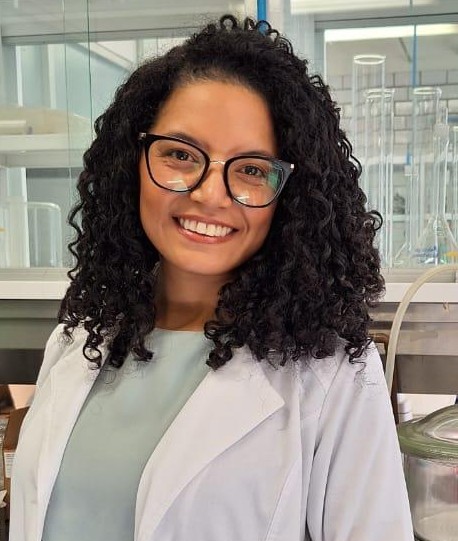
Dr. Sara de Jesus Duarte
Dr. Sara Duarte is a soil scientist and biochar consultant with over 10 years of experience developing tailored solutions for sustainable agriculture. She specializes in biochar blend design, soil management, and field validation, helping organizations improve soil health, optimize fertilizer use, enhance water retention, and increase crop productivity. As CSO and Co-founder of Super Biochar, she combines soil science, research, and hands-on field experience to translate biochar innovation into practical solutions that deliver measurable benefits for farmers and soil remediators. As the author of Biochar: Fueling a New Economy in the Developing World (Taylor & Francis, 2026), her mission is clear: to turn agricultural residues into valuable resources that support farmer profitability and climate action.