Carbon Market Network


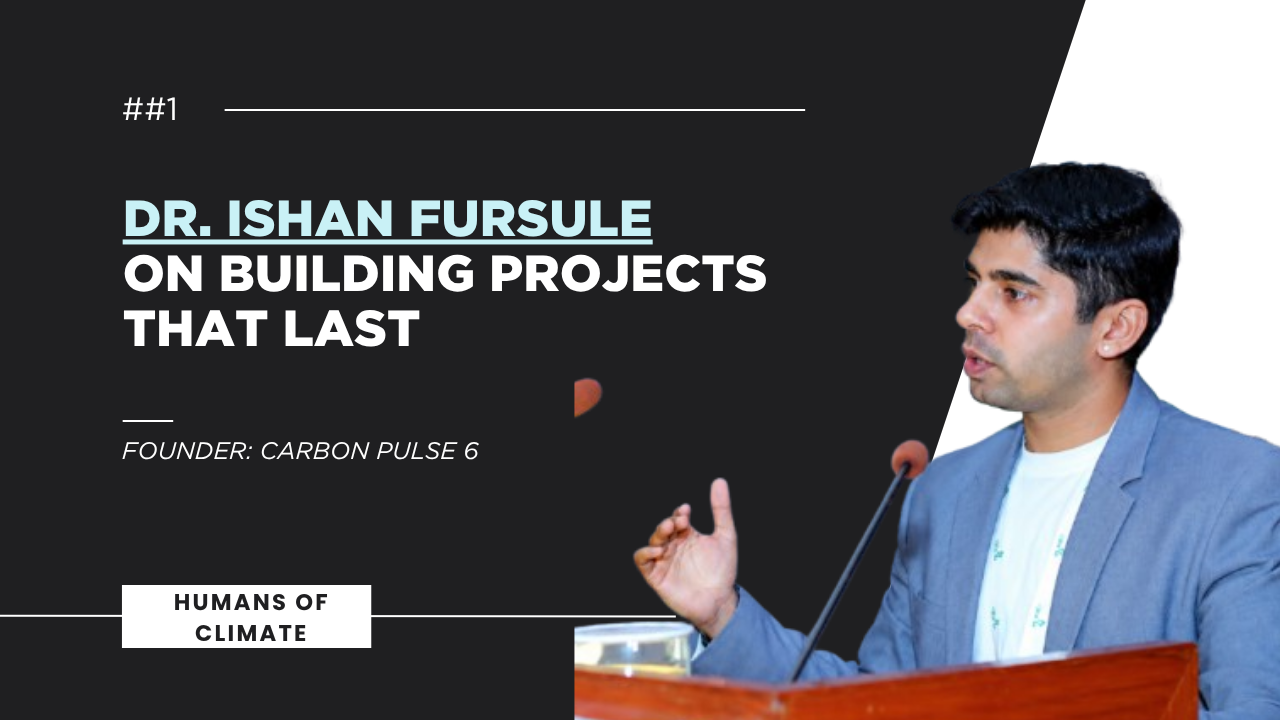
Carbon markets are having a complicated moment. They are growing faster than most analysts predicted, drawing institutional capital, regulatory attention, and public scrutiny in roughly equal measure. Into this environment steps a particular kind of professional: not the advocate, not the critic, but the practitioner who has been inside the machinery long enough to know where it holds and where it bends.
Dr. Ishan Fursule is a Carbon Project Developer and Engineered Carbon Dioxide Removal specialist. His work spans Biochar, BECCS, DACCS, and CCS. He holds a PhD in Chemical Engineering and has spent the better part of a decade translating technical feasibility into financeable, certifiable, commercially viable carbon removal projects. Through his consulting firm, Carbon Pulse 6, he works with project developers, technology companies, and investors across multiple continents. He is someone who has operated on both sides of the credibility problem that continues to shadow voluntary carbon markets, and who thinks carefully about how to close that gap.
From Vidarbha to a Two-Storey tall Carbon Capture Plant
The intellectual path that led Ishan Fursule to carbon markets begins, somewhat unexpectedly, with water scarcity in rural Maharashtra.
Growing up in the Vidarbha region, one of the driest parts of India, his household received drinking water for just two hours every eight days. Those two hours were a family-wide operation. Every available container was filled, water was carefully purified, and nothing was wasted. That early proximity to resource constraint, combined with several years spent in a small village, created a connection with the natural world that formal education would later give a technical vocabulary.
After completing his engineering degree in Mumbai and moving to the United States for postgraduate study, Fursule developed a passion for hiking and trekking that deepened that connection. During his PhD, he made a deliberate decision: whatever came next would be in sustainability. It remains, he says, one of the best he has made.
What came next was, by any measure, exceptional. He joined a team building a carbon capture pilot plant, and the role bore little resemblance to what he had expected.
“I was involved in everything from design and fabrication to commissioning, solvent testing, sensor selection, and field operations.”
The experience became immersive enough that he could disassemble and reassemble the entire two-storey tall structure himself, analyse daily datasets, and interpret computer simulation modelling. That kind of hands-on fluency, rare among professionals who enter carbon markets from purely financial or policy backgrounds, has defined his approach ever since.
His transition into voluntary carbon markets followed from a recognition of a structural problem. He saw a significant knowledge gap between investors and technology suppliers, particularly around translating technical innovation into projects that could attract financing and scale. Carbon finance, he concluded, was one of the most direct ways to bridge that gap.
What Actually Decides Whether a Project Matters
When a new project crosses his desk, Fursule’s first question is not about methodology or price. It is about “Intent”.
“The very first thing I look at is the inspiration behind the project,” he explains. “I naturally connect with projects where the founders genuinely want to create meaningful value for both the environment and the community.” Once that purpose is established to his satisfaction, he then evaluates scalability and long-term impact potential. Purpose and scale, in his framework, are not in tension. They are complementary.
That orientation shapes his thinking on the larger question of what separates a project that simply generates credits from one that genuinely makes a difference. He draws a clear distinction between technologies that, by their nature, create limited social co-benefits and those that embed community participation in their design. Direct Air Carbon Capture and Storage, for example, is primarily an engineering solution. Its value is real, but its relationship to local economies and livelihoods is limited by what the technology does.
Artisanal biochar, by contrast, involves farmers and rural communities directly in climate action. It improves soil health, generates employment, and strengthens local economies alongside the primary carbon removal function.
“The real difference lies in intent and creativity. If you’re aware of the broader impact you can create, you can build meaningful community value regardless of the technology.”
He has also seen DAC project developers in the Global South invest in community development programmes that contribute to multiple Sustainable Development Goals, demonstrating that even technology-heavy projects can extend their impact if their developers choose to.
Carbon Market Insider Newsletter
Weekly insights on carbon markets, climate policy, carbon credits, and sustainability.
The Two Technologies He Backs
Of the technologies he has worked across throughout his career, two occupy a distinct category in Fursule’s thinking: Biochar and BECCS.
His reasoning is not simply about carbon removal potential, though both offer it at meaningful scale. What draws him is their relative robustness and the breadth of what they produce alongside carbon credits. These are not single-output solutions. Biochar improves agricultural productivity, supports rural livelihoods, and provides durable carbon storage in a form that can be verified and monitored. BECCS generates energy while capturing the carbon that would otherwise be released during biomass combustion. As these technologies scale, their benefits compound across environmental, social, and economic dimensions simultaneously.
That multiplier effect, where environmental ambition and tangible community benefit reinforce each other, is a recurring theme in how Fursule evaluates both projects and technologies. It is also what he believes gives Biochar and BECCS their long-term staying power, not just as carbon market assets, but as solutions that generate the kind of political and community support that sustains projects through regulatory cycles and market volatility.
The Uncomfortable Truths
Ishan Fursule takes a balanced approach when discussing the shortcomings of the voluntary carbon market, addressing them without shying away from the challenges. The first uncomfortable truth, in his view, is about complexity.
“From the outside, the voluntary carbon market often looks much simpler than it actually is.”
Project developers who enter without a clear understanding of financial modelling, market dynamics, and commercialization strategy frequently underestimate what they are walking into. The VCM is volatile. Building a technically sound project is only one part of the challenge. The business side, including how to structure revenue, manage timing, and communicate value to buyers, matters in equal measure.
The second uncomfortable truth concerns the monitoring problem. When asked about projects he has walked away from, Fursule points immediately to weak DMRV, the Digital Monitoring, Reporting, and Verification systems that underpin carbon credit integrity. “If the monitoring system isn’t robust, there is always a risk of inaccurate or manipulated data,” he says. “Since data integrity is the foundation of carbon markets, that’s a compromise I’m simply not willing to make.” He applies the same logic to expertise boundaries. He declines projects in sectors where he is not a specialist, such as renewable energy or clean cookstoves, rather than stretching his scope beyond what he can credibly deliver.
The discipline to say no, he argues, is not a limitation. It is a form of quality control.
What Buyers Actually Want
Carbon credit buyers make decisions that look, from the outside, as though they are primarily driven by price. Fursule’s experience suggests the picture is considerably more nuanced.
Price matters, he acknowledges, but it is heavily shaped by other factors. What actually moves buyers is a project’s vision, its transparency, and the clarity with which its developers can articulate long-term impact. Buyers want to understand how their investment contributes to decarbonization not just in the near term, but well beyond the project’s operational lifetime. When that story is told clearly and credibly, it allows a buyer to assess alignment with their company values, supply chain commitments, and sustainability strategy. That alignment is what creates genuine purchase confidence.
His preferred diagnostic question for buyers reflects this. After all the technical due diligence, after additionality, leakage, and risk have been assessed, he suggests one final test:
“Would I come back and buy credits from this project again?”
An affirmative answer, he argues, is the most reliable signal that the project genuinely fits a buyer’s long-term climate commitments and that the due diligence has been done properly.
On Rebuilding Trust From Scratch
Asked to imagine a scenario in which every carbon registry disappeared overnight, Fursule does not reach for institutional solutions. He reaches for data.
His reasoning is direct. Thousands of projects, spanning biochar, afforestation, agroforestry, and beyond, have spent years generating monitoring and verification data using increasingly sophisticated technologies. That data tells the real story of what these projects have and have not achieved. Even in the absence of registries, transparent and independently verifiable project data would, in his view, provide a credible foundation from which trust could be rebuilt. The infrastructure can fail. The record of what actually happened in the field does not have to.
Where He Would Deploy ₹100 Crore
For a specific question about capital deployment in India, Fursule’s answer reflects a portfolio instinct rather than a single conviction.
He would divide investment across several categories. A portion would go into climate-focused equities and funds. A larger share would be deployed into on-the-ground carbon dioxide removal projects, with roughly forty percent directed toward metro areas and sixty percent toward rural and remote regions. Within that, he would prioritise afforestation, agroforestry, biochar, and mangrove restoration. A meaningful allocation would go toward technology development, on the grounds that innovation is inseparable from scale. And approximately twenty percent would be directed at Carbon Capture projects in hard-to-abate industrial sectors: cement, steel, and chemicals.
“If you close the CO₂ tap itself, at least the bathtub won’t overflow.”
The analogy captures his view that net zero requires all available tools deployed simultaneously. CDR, CCS, avoidance, and reduction are not competing philosophies but complementary forces, each essential to the whole.
The Debate He Thinks Is Almost Over
On the question of what the carbon industry will look back on as a wasted argument, Fursule points to the sustained conflict between CCS and CDR, and more broadly between removal, reduction, and avoidance as competing philosophies.
These debates have consumed significant industry energy. He regards them as increasingly irrelevant. “My hope is that five years from now, we’ll simply have far more successful projects across every category,” he says. If CCS reaches the same level of adoption as CDR and reduction projects, that outcome would, in his view, represent a genuine climate success, not a compromise. The logic of the climate problem does not permit the luxury of choosing a single favoured tool.
Quick Takes
One carbon market myth he would love to retire: The idea that credits are easy to sell.
The book that has shaped how he thinks: Atomic Habits.
The best career advice he has received: Keep the boundaries open. Explore and expand.
The skill every climate professional should develop: Carbon accounting.
The publication he never misses: Carbon Herald.
The climate figure he would most like to speak with at length: Sonam Wangchuk.
The emerging trend he is watching over the next five years: Long-term deals and advance market commitments.
On the future of carbon markets: “The future of carbon markets depends on climate education extending to the whole company or organisation.”
On what the industry needs more of: Influencers and leaders who can communicate climate action clearly and credibly.
To the Next Generation
Fursule’s advice to young professionals entering climate tech carries the same practical orientation that runs through everything else he says.
Start exploring as early as possible, he argues, and do not wait for the right job or internship to appear. Small, hands-on projects, supported where possible by the grants and early-stage funding that are more available than most people realise, will teach more about climate tech than any amount of reading.
“Create real impact, learn from the experience, and let those early successes become your inspiration.”
Climate tech is one of the few industries where a small project can make a measurable difference from the outset. That, in his view, is not a consolation. It is the point.
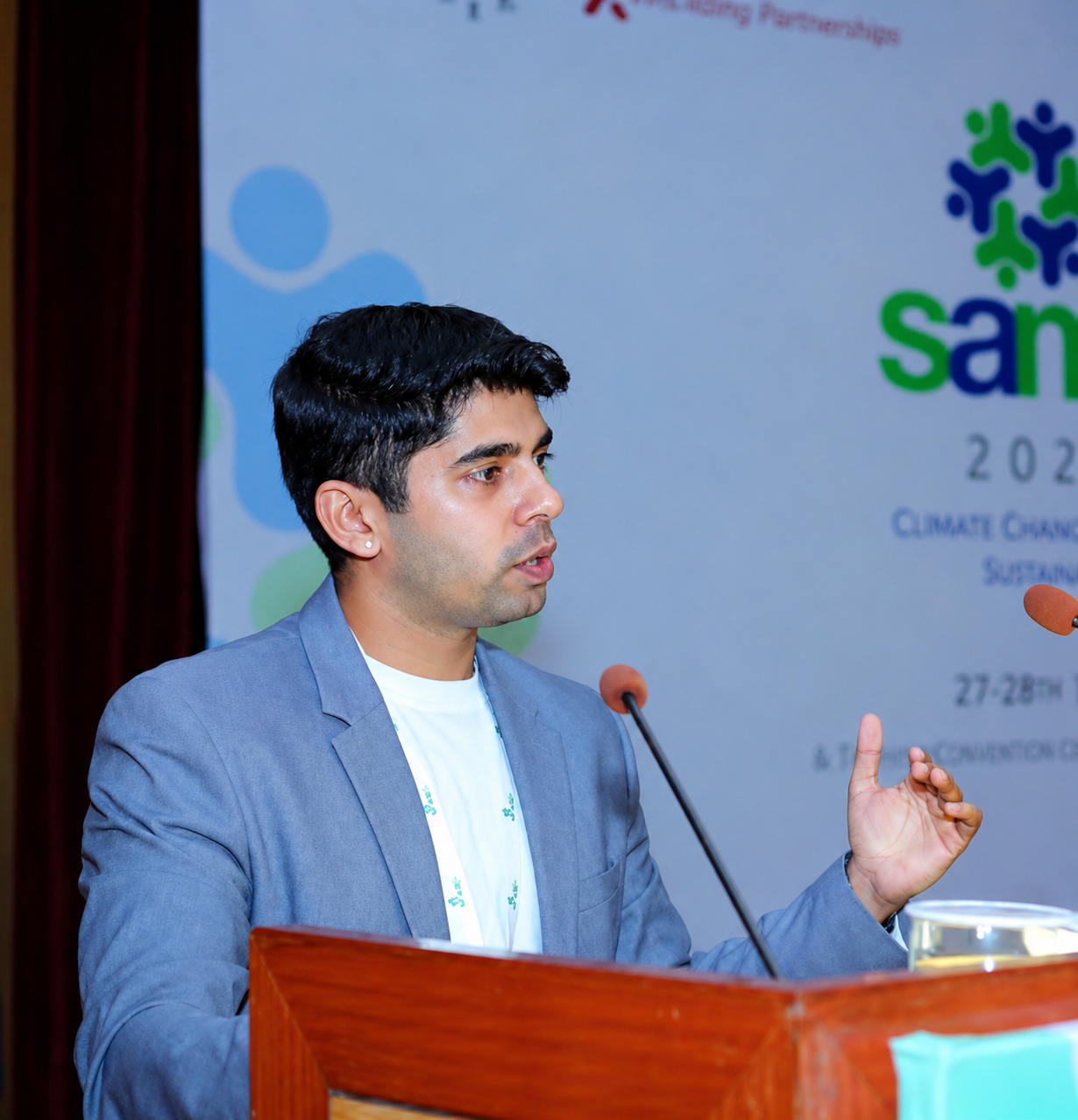
Dr. Ishan Fursule
Dr. Ishan Fursule is a Carbon Project Developer and Engineered Carbon Dioxide Removal (CDR) Specialist with over eight years of experience developing high-integrity carbon removal projects across Biochar, Enhanced Rock Weathering (ERW), BECCS, DACCS, and CCS. With a PhD in Chemical Engineering, he combines deep technical expertise with practical experience in voluntary carbon markets, MRV systems, carbon certification, and project commercialization.